


We're so jazzed! Our blog has been nominated by Indies Unlimited for "Best Resource for Indies"—one of just 7 blogs—along with the fantastic Kristen Lamb, Joel Friedlander "The Book Designer", The Passive Voice, The Creative Penn, David Gaughran's "Let's Get Digital", and The Indie View. It's so amazing for a slow, once-a-week blog to be nominated with all those major bloggers.
Anybody can vote over at Indies Unlimited. Voting closes on February 21st at 5 PM Pacific time.
Of course, we don't just write for self-publishers. Our guest today is with a small niche press, as I am, and Ruth was with several of the big houses (and edited for them) before she started self-publishing. That means we have experience with all types of publishing. We don't want our readers to feel we're trying to push you onto one path or another.
It seems I'm not the only blogger who thinks "Short is the New Long," which I wrote in a post last May.
Penny Sansevieri, CEO of Marketing Experts Inc., said in her predictions for 2014 in the HuffPo:
"Short is the new long. You don’t have to be writing 500-page tomes. Create one or two full length books a year plus micro-content such as novellas or shorter books. It’s a great way to gain visibility and stay in front of your readers."
Years ago, when I started writing fiction—as opposed to journal articles for career advancement in academe—I fell in love with flash fiction. That love affair lasted throughout the 1990’s, well into the millennium, and beyond. I loved the form and was quite content to stay within those teeny-tiny word limits. At the time, I also took classes in flash, presented writing workshops on the form, and participated in several online critique groups for flash writers.
 When I taught at Allan Hancock College, I edited Mindprints, A Literary Journal, devoted to flash fiction and memoir pieces of 250-750 words. Here's a piece I wrote giving tips for writing good flash fiction.
During that time, I managed to write and publish a few short stories other than flash, but nothing beyond the 5,000 to 6,000-word range.
With the advent of the E-Age, I began to think seriously about writing longer work. The novel absolutely terrified me, so I gravitated to the novella: something in between a very long story and a novel.
When I began writing my first WWII novella, The View from 16 Podwale Street, and later with Bomber’s Moon, I told myself I was only writing flash, and that each scene or chapter was a kind of mini-flash piece with its own story arc. Little did I know that this strategy would work, and I’d soon be off and running with a romance series and a much larger story to tell.
Searching for a precise definition of a novella can be a maddening experience. Some consider novellas very long short stories, while others call them short novels, or say they’re synonymous with novelettes.
Nothing specific there, right? I was just about to give up when I stumbled upon a terrific article in the New Yorker by British novelist and screenwriter, Ian McEwan. Not only did he define the form, but he specified word limits most publishers, including my own, would agree with—give or take a few thousand at the top or bottom of the range.
“Novellas are between twenty and forty
 thousand words, long enough for a reader to inhabit a world or a consciousness and be kept there, short enough to be read in a sitting or two and for the whole structure to be held in mind at first encounter.”
McEwan went on to discuss the strong similarity between novellas and screenplays in their overall unity and economy.
"To sit with a novella is analogous to watching a play or a longish movie."
I have to admit I was totally stoked when I read that. I’d been using screenplay techniques as a pre-writing strategy for flash fiction and short stories for years. In fact I wrote an article for Byline magazine about the flash-screenplay connection in 2005. It's since been reprinted at Fiction Fix. Is it any wonder I was drawn to the novella form?
Let’s see how this prewriting thing works. We’ll take a look at my novella, Bomber’s Moon, and apply the strategy.
 The idea for Bomber’s Moon came from an incident in my childhood. Mom and I were sitting at the breakfast table discussing a lovely Englishwoman she worked with in an upscale dress shop, someone who had lived through the London Blitz and still suffered in the late 1950’s from what we’d probably now call PTSD.
I took this idea and went into a “what if” frenzy, asking myself all sorts of questions: How did Londoners manage to survive day to day under such unimaginable conditions? What was it like being gay back then, and in a relationship, having to keep it all a secret except perhaps from your closest friends? These questions and many more would later guide character development as well as plot development in Bomber’s Moon.
Anne has previously written an excellent post on loglines. So there’s really no need to reinvent the wheel here other than to say a screenplay logline is a short, one-sentence statement of the film’s premise. Think TV Guide descriptions of cable movies.
Here’s an example:
Nebraska: An aging, booze-addled father makes the trip from Montana to Nebraska with his estranged son in order to claim a million dollar Mega Sweepstakes Marketing prize.
And another one:
August: Osage County: A look at the lives of the strong-willed women of the Weston family, whose paths have diverged until a family crisis brings them back to the Oklahoma house they grew up in, and to the dysfunctional woman who raised them.
Here’s the logline for Bomber’s Moon:
During the London Blitz, and after losing his life partner in a tragic accident, Leslie Atwater, a young gay man, discovers his lover’s death may not have been an accident and sets out to uncover the truth.
**I know, I know. It ain’t Shakespeare. You’re using it as a guide or throughline for developing your story. No one but you will see it.
Often I know the book’s theme before I start to write. Sometimes I don't and it surfaces later in the writing. Still, it’s a terrific bonus if you do can articulate theme because it provides a wonderful subtext for scenes and dialogue.
"Journeys end in lovers meeting" is the main theme of Bomber’s Moon.
First, here’s a quick overview of three-act structure.
This pre-writing three-act paradigm for Bomber’s Moon, adapted from a screenwriting text by Syd Field is far from complete. But having the structure planned out as much as possible beforehand, kept me focused on the storyline, while I filled in the blanks of the paradigm as I went along in the first draft.
For a more thorough discussion and examples of the three-act structure, please see: The Elements of Cinema.
This process may or may not work for you. I can only say it does for me. And in a big way.

Paul Alan Fahey created and edited Mindprints, an international literary journal for writers and artists with disabilities, at Allan Hancock College in Santa Maria, California. During Paul’s seven-year tenure, Mindprints made Writers Digest’s “Top 30 Short Story Markets” list for two consecutive years. He is the author of the Lovers and Liars Gay Wartime Romance series, published by JMS Books. Paul is the editor of the 2013 Rainbow Award winning anthology, The Other Man: 21 Writers Speak Candidly About Sex, Love, Infidelity, & Moving On. His first WWII novella, The View From 16 Podwale Street, also won a Rainbow Award in 2012.
What about you, scriveners? Have you written a novella? Any advice to add to Paul's? Any questions you'd like to ask him?

The 11th Yeovil International Literary Prize now open for entries. Aspiring writers throughout the world are invited to enter this prestigious writing competition. Prize categories for novels, short fiction, poetry. Entry fee £11 for novels. 1st prize £1000. Deadline May 31st.
GLIMMER TRAIN FAMILY MATTERS CONTEST $1500 prize, plus publication in Glimmer Train Stories, plus 20 copies. $15 ENTRY FEE. They're looking for stories about families of all configurations. It's fine to draw on real experiences, but the work must read like fiction. Maximum word count: 12,000. Any shorter lengths are welcome. Deadline March 31.
Write Flash? INNOVATIVE SHORT FICTION CONTEST $15 ENTRY FEE. $500 prize plus the winning story will be published in The Conium Review's next issue. Innovative short fiction should take risks that pay off. Don’t tell us a story we’ve already heard before. Show us something new with your subject, style, or characters.Your submission may include any combination of flash fictions or short stories up to 7,500 total words. Deadline March 15, 2014.
Dark Continents Publishing's Guns and Romances anthology. They're looking for previously unpublished short fiction from 3500-9000 words. Any genre as long as there's a tough protagonist, weapons, and... at least one reference to music. Sounds interesting. Payment rate is a one-off of $20 per story plus a percentage of the ebook royalties. Publication estimated in late-2014. More info on the website. Deadline February 28.
ERMA BOMBECK WRITING COMPETITION $15 ENTRY FEE. Capture the essence of Erma's writings and you could win $500 and a free registration to the Erma Bombeck Writers Workshop! Personal essay must be 450 words or less (entries of more than 450 words will be disqualified). Two categories: humor and human interest. Deadline February 17.
It seems I'm not the only blogger who thinks "Short is the New Long," which I wrote in a post last May.
Penny Sansevieri, CEO of Marketing Experts Inc., said in her predictions for 2014 in the HuffPo:
"Short is the new long. You don’t have to be writing 500-page tomes. Create one or two full length books a year plus micro-content such as novellas or shorter books. It’s a great way to gain visibility and stay in front of your readers."
No doubt about it: novellas are hot.
Perhaps the popularity of the novella also comes with our love of movies. As Paul tells us, the novella has a lot in common with a screenplay. It is also the fiction form most easily adapted to film.
- Traditionally published authors self-publish them to fill in the time between the snail-speed production schedule of their own publishers and increase their revenue stream.
- Indies use them to explore characters in their series that readers want to know more about.
- Readers who have less time to read than they used to enjoy getting into a meaty story that has a satisfying beginning, middle and end, but doesn't take weeks to get through.
Perhaps the popularity of the novella also comes with our love of movies. As Paul tells us, the novella has a lot in common with a screenplay. It is also the fiction form most easily adapted to film.
My own publisher keeps encouraging me to write novellas to fill in the gaps in Camilla and Plantagenet's history.
Have I followed the advice?
Nope.
That's because I find writing novellas really hard. I think in terms of the "long game". For me an 80,000 word novel is short. How can I explore a big topic in 20,000 words?
I decided to ask award-winning novella author Paul Alan Fahey for some advice. Paul's book The Other Man was honored by the American Library Association last month, and received a Rainbow Award in 2013. The View from 16 Podewale Street, the first of his beautifully-crafted novellas set in WWII Britain, won a Rainbow Award in 2012.
I hope his advice will help us all to keep up with the new trend....Anne
NOVELLAS AND SCREENPLAYS: MORE IN COMMON THAN YOU THINKbyPaul Alan Fahey
Years ago, when I started writing fiction—as opposed to journal articles for career advancement in academe—I fell in love with flash fiction. That love affair lasted throughout the 1990’s, well into the millennium, and beyond. I loved the form and was quite content to stay within those teeny-tiny word limits. At the time, I also took classes in flash, presented writing workshops on the form, and participated in several online critique groups for flash writers.
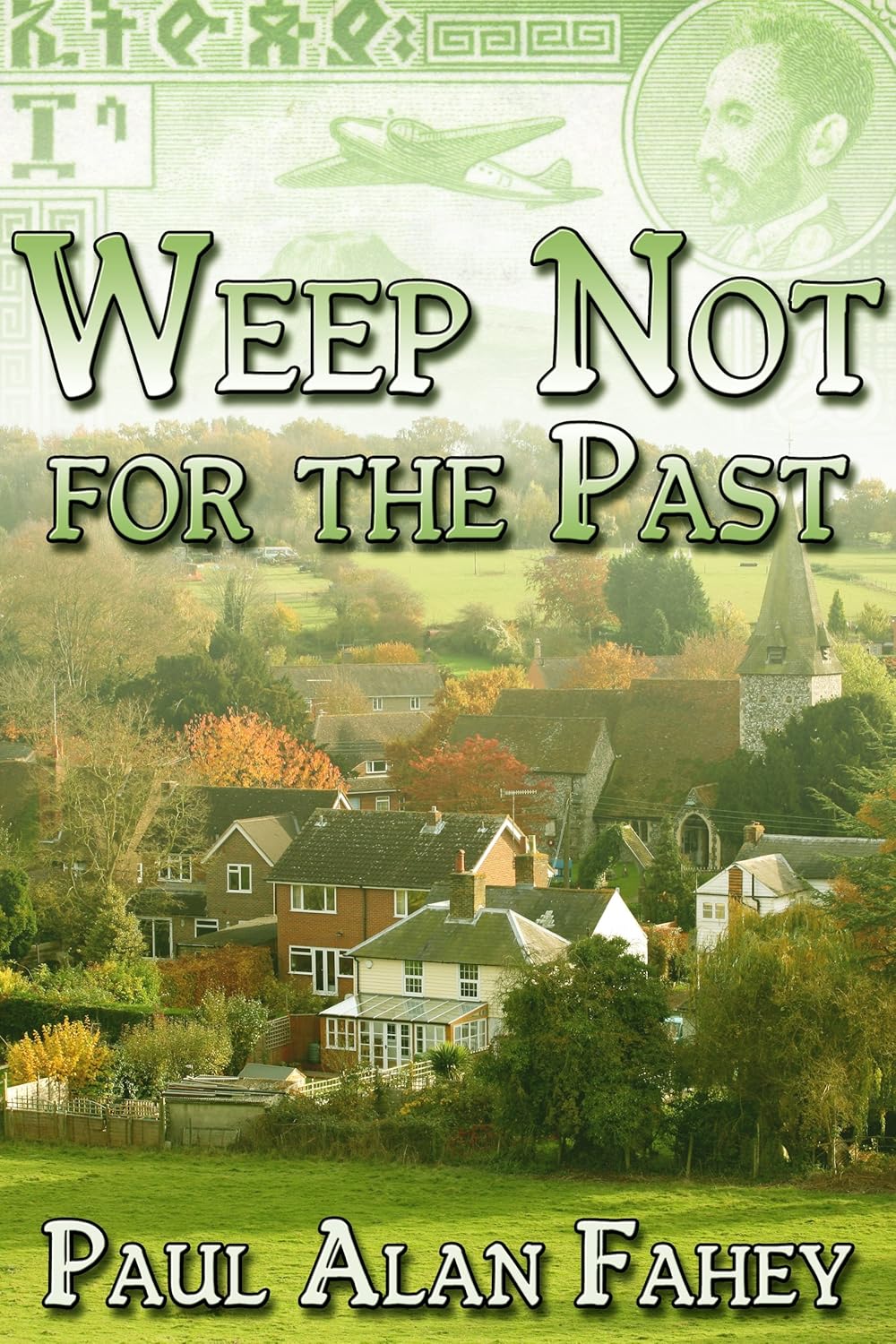
During that time, I managed to write and publish a few short stories other than flash, but nothing beyond the 5,000 to 6,000-word range.
With the advent of the E-Age, I began to think seriously about writing longer work. The novel absolutely terrified me, so I gravitated to the novella: something in between a very long story and a novel.
When I began writing my first WWII novella, The View from 16 Podwale Street, and later with Bomber’s Moon, I told myself I was only writing flash, and that each scene or chapter was a kind of mini-flash piece with its own story arc. Little did I know that this strategy would work, and I’d soon be off and running with a romance series and a much larger story to tell.
Novellas in the E-Age: A Definition
Searching for a precise definition of a novella can be a maddening experience. Some consider novellas very long short stories, while others call them short novels, or say they’re synonymous with novelettes.
Nothing specific there, right? I was just about to give up when I stumbled upon a terrific article in the New Yorker by British novelist and screenwriter, Ian McEwan. Not only did he define the form, but he specified word limits most publishers, including my own, would agree with—give or take a few thousand at the top or bottom of the range.
“Novellas are between twenty and forty

McEwan went on to discuss the strong similarity between novellas and screenplays in their overall unity and economy.
"To sit with a novella is analogous to watching a play or a longish movie."
I have to admit I was totally stoked when I read that. I’d been using screenplay techniques as a pre-writing strategy for flash fiction and short stories for years. In fact I wrote an article for Byline magazine about the flash-screenplay connection in 2005. It's since been reprinted at Fiction Fix. Is it any wonder I was drawn to the novella form?
THE PREWRITING STRATEGY
Let’s see how this prewriting thing works. We’ll take a look at my novella, Bomber’s Moon, and apply the strategy.
Step 1: Find a Story Idea
I took this idea and went into a “what if” frenzy, asking myself all sorts of questions: How did Londoners manage to survive day to day under such unimaginable conditions? What was it like being gay back then, and in a relationship, having to keep it all a secret except perhaps from your closest friends? These questions and many more would later guide character development as well as plot development in Bomber’s Moon.
Step 2: Turn the Idea into a Logline
Anne has previously written an excellent post on loglines. So there’s really no need to reinvent the wheel here other than to say a screenplay logline is a short, one-sentence statement of the film’s premise. Think TV Guide descriptions of cable movies.
Here’s an example:
Nebraska: An aging, booze-addled father makes the trip from Montana to Nebraska with his estranged son in order to claim a million dollar Mega Sweepstakes Marketing prize.
And another one:
August: Osage County: A look at the lives of the strong-willed women of the Weston family, whose paths have diverged until a family crisis brings them back to the Oklahoma house they grew up in, and to the dysfunctional woman who raised them.
Here’s the logline for Bomber’s Moon:
During the London Blitz, and after losing his life partner in a tragic accident, Leslie Atwater, a young gay man, discovers his lover’s death may not have been an accident and sets out to uncover the truth.
**I know, I know. It ain’t Shakespeare. You’re using it as a guide or throughline for developing your story. No one but you will see it.
Step 3. Write the Story Theme from the Logline
Often I know the book’s theme before I start to write. Sometimes I don't and it surfaces later in the writing. Still, it’s a terrific bonus if you do can articulate theme because it provides a wonderful subtext for scenes and dialogue.
"Journeys end in lovers meeting" is the main theme of Bomber’s Moon.
Step 4: Determine the Three Acts and As Many Plot Points as Possible
First, here’s a quick overview of three-act structure.
- Act I, Set Up: Introduces setting, characters and the main story conflict or the inciting incident.
- Plot Point 1: The first major turning point or event that closes the first act and moves the characters into…
- Act II, Confrontation: The main character struggles to achieve his/her goal amid ever increasing obstacles.
- Midpoint: A subtle turning point in the plot midway through the story.
- Plot Point 2: A devastating setback or reversal in the main character’s fortune that leads to…
- Act III, Resolution: The final confrontation and highest point of action (climax) before the character reaches goal.
- Act I: Set Up: During the day, Leslie works as a clerk in a modest bookshop in Central London. By night, he’s an air raid warden in his district responsible for the safety of his “flock.” In an effort to feel closer to Edward, he spends his evenings in their flat reviewing his partner’s sketches and soon discovers irregularities he can’t explain.
- Plot Point 1: Leslie, convinced his lover’s death wasn’t an accident. Despite warnings from friends to let well enough alone, he sets out on a journey. How did Edward die?
- Act II Confrontation Leslie learns more about Edward’s work assignment the day he died. He begins to question family members and colleagues at The Globe. This leads him on a journey through London and into the countryside as he follows the clues. (Vague? You bet, but it works for now.)
- Act III Resolution: I envisioned a climax in a lighthouse overlooking the English Channel with enemy aircraft overhead. The ending would be a happy one—journeys end in lovers meeting—since Bomber’s Moon is a romance, and I was following conventions of the form.
This pre-writing three-act paradigm for Bomber’s Moon, adapted from a screenwriting text by Syd Field is far from complete. But having the structure planned out as much as possible beforehand, kept me focused on the storyline, while I filled in the blanks of the paradigm as I went along in the first draft.
For a more thorough discussion and examples of the three-act structure, please see: The Elements of Cinema.
This process may or may not work for you. I can only say it does for me. And in a big way.
***

Paul Alan Fahey created and edited Mindprints, an international literary journal for writers and artists with disabilities, at Allan Hancock College in Santa Maria, California. During Paul’s seven-year tenure, Mindprints made Writers Digest’s “Top 30 Short Story Markets” list for two consecutive years. He is the author of the Lovers and Liars Gay Wartime Romance series, published by JMS Books. Paul is the editor of the 2013 Rainbow Award winning anthology, The Other Man: 21 Writers Speak Candidly About Sex, Love, Infidelity, & Moving On. His first WWII novella, The View From 16 Podwale Street, also won a Rainbow Award in 2012.
What about you, scriveners? Have you written a novella? Any advice to add to Paul's? Any questions you'd like to ask him?
Book of the Week
Paul Alan Fahey's latest novella, LOVERS AND LIARS is available in paper (and on sale!) at JMS Books, Amazon US, Amazon UK, and Nook
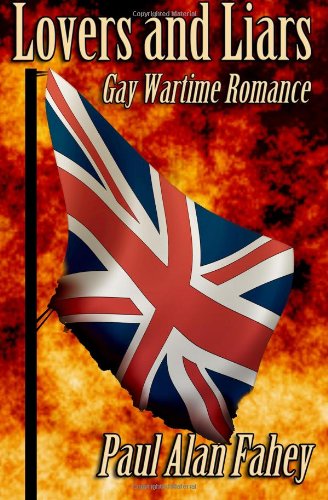
"Brimming with atmosphere, this historical setting envelopes the reader and transports them to a place and time that is both real and vividly imagined. These are glamorous people set against the backdrop of a time spare in luxuries, and in the reading of these books, they have become friends with whom I’m always glad to spend time, participating in their adventures, commiserating with their trials, sympathizing with their cause, and I look forward to their continuing journey."...Lisa Horan at Novel Approach Reviews
The other novellas in the series are also available as ebooks from JMS Books and most retailers.
Deal of the Week
In honor of the Beatles 50th anniversary, Michael Harris's bestseller, ALWAYS ON SUNDAY is only 99c this week. It's on Kindle, Nook, Kobo, iBooks and AmazonUK (All the other Amazons, too.)

Deal of the Week
In honor of the Beatles 50th anniversary, Michael Harris's bestseller, ALWAYS ON SUNDAY is only 99c this week. It's on Kindle, Nook, Kobo, iBooks and AmazonUK (All the other Amazons, too.)
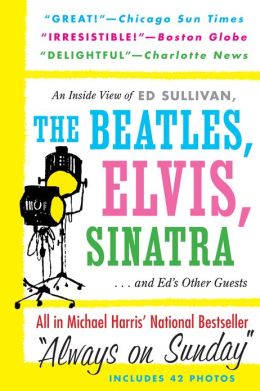
Michael worked for the Ed Sullivan Show in the 1960s, and was assigned to meet the Beatles at Kennedy Airport that day in 1964. He says Ed was warned not to sign the Beatles: "You're crazy! No British group has ever made it big in this country." A month before they arrived, they were still unknown in America.
Two weeks later, "I Want To Hold Your Hand" rocketed to the top of the charts and Beatlemania had begun. On February 14, Michael greeted the Beatles again, this time in Miami for a second Sullivan show. Thanks to papparazzi determined to cash in on every shot of the Fab Four, Michael appeared in photos published around the world. In the captions he was identified as "a Beatle".
OPPORTUNITY ALERTS
The 11th Yeovil International Literary Prize now open for entries. Aspiring writers throughout the world are invited to enter this prestigious writing competition. Prize categories for novels, short fiction, poetry. Entry fee £11 for novels. 1st prize £1000. Deadline May 31st.
GLIMMER TRAIN FAMILY MATTERS CONTEST $1500 prize, plus publication in Glimmer Train Stories, plus 20 copies. $15 ENTRY FEE. They're looking for stories about families of all configurations. It's fine to draw on real experiences, but the work must read like fiction. Maximum word count: 12,000. Any shorter lengths are welcome. Deadline March 31.
Write Flash? INNOVATIVE SHORT FICTION CONTEST $15 ENTRY FEE. $500 prize plus the winning story will be published in The Conium Review's next issue. Innovative short fiction should take risks that pay off. Don’t tell us a story we’ve already heard before. Show us something new with your subject, style, or characters.Your submission may include any combination of flash fictions or short stories up to 7,500 total words. Deadline March 15, 2014.
Dark Continents Publishing's Guns and Romances anthology. They're looking for previously unpublished short fiction from 3500-9000 words. Any genre as long as there's a tough protagonist, weapons, and... at least one reference to music. Sounds interesting. Payment rate is a one-off of $20 per story plus a percentage of the ebook royalties. Publication estimated in late-2014. More info on the website. Deadline February 28.
ERMA BOMBECK WRITING COMPETITION $15 ENTRY FEE. Capture the essence of Erma's writings and you could win $500 and a free registration to the Erma Bombeck Writers Workshop! Personal essay must be 450 words or less (entries of more than 450 words will be disqualified). Two categories: humor and human interest. Deadline February 17.


