• RSS
  • Delicious
  • Digg
  • Facebook
  • Twitter
  • Linkedin
  • Youtube
Showing posts with label Anne Gallagher. Show all posts


I visit a lot of author websites and blogs. Most are delightfully creative. I love how so many of the sites—especially the blogs—express the author’s personality and genre in a unique and clever way.

But then there are the others...

I’m talking about the sites that seem to have forgotten they have a purpose. They don’t offer even basic information. They may have a rant front and center, with no info on who the author is and what he/she writes. Or they may be so hard to read and tech-happy, they scream: “get out now! Save yourself!”

What’s sad is the worst offenders are often the expensive, professionally designed sites.

One of the reasons I suggest that new writers start a blog instead of a static, official-looking website is that a blog is free. But an equally good reason is that free blogs use templates, and templates are harder to screw up.

You have to work harder to make a free Blogger or Wordpress site truly awful because you don’t have the opportunity to make so many bad choices.

What makes a website awful?

Of course it's subjective. What some people love others will hate. I’m not talking about stuff that’s technically “wrong” or out of style with the geekinistas. I’m commenting merely as a frequent Web surfer.

First I should mention some things that work.

There are lots of great websites. A great example of a simple but effective DIY author website is Catherine Ryan Hyde's, and mystery author C. Hope Clark has a lovely professionally-designed site that is friendly, inviting and easy to navigate. Regency romance writer Anne Gallagher has managed to make a free Blogger blog into a gorgeous author website.

My site here is a simple Blogger blog that I’m sure wouldn’t win any design awards. But it’s easy to read and “cozy”—or at least that’s what somebody on Reddit called it when they recommended it a few weeks ago. (Thank you, anonymous Reddit fan!) That’s exactly the tone I hoped to create—a cozy, bookish spot to stop by with a cup of tea on a Sunday afternoon. With a sly hint of dark humor in the books on the shelf.

I created it with a few tweaks to the Blogger Watermark template and a fantastic photo of a shelf in my study taken by the multi-talented Christine Ahern. I chose the green background for the selfish reason that it’s easy on my aging eyes. I tried to choose a green that was pale enough to contrast with the darker text without being too wimpy.  It took me a couple of years to figure out that I could make the link text darker by going to the “advanced” menu on the Blogger template. Thanks much to the readers who helped me out with that.

But most of all, I worked on the principle of less is more. That’s when people screw up—when they try to get too creative with things outside their skill set.

And remember: just because you (or your web designer) CAN do something, doesn’t mean you SHOULD.

Hey, we’re writers. We should save our creativity for our books and stories.

I’m talking here about stuff that makes me feel assaulted, unwelcome, or wastes my time when I land on a page.

If you want more professional advice on what makes websites successful or not, check out Vincent Flanders' Websites that Suck.

Here’s my very subjective list of top ten things NOT to do on your website or blog:

1) GIFs 

 A GIF is a graphic file type invented by Internet pioneer Steve Wilhite. It’s composed of many different images on top of each other, which are compressed, creating the illusion of a mini movie. GIF stands for Graphics Interchange Format.  Some people say “jif” like the peanut butter, and others say it with a hard “g.”  But at this year’s WEBBY Awards, he Mr. Wilhite announced that it’s “jif” as in “jiffy”...so, mystery solved.

OK, GIFs can be cool. But not on an author’s website. That's because they're distracting and pull the reader away from your text. Sometimes I have to cover a GIF with a piece of paper so I can concentrate on the text long enough to read it.

Remember: you’re a writer, so text should have priority.

They also take a long time to load. Most readers only have a minute or so to spend on your page. If that time is taken up loading the GIF, they’ll be long gone before they read your immortal prose.

2) Lots of warring colors and unpleasant color combos 

Like pumpkin and mustard. If they wouldn’t taste good together, they probably don’t look good either. Startling color combos might make people take notice, but not in a good way. Remember the point is to make people want to stay and look around.

And unless you’re writing exclusively for tween girls, go easy on the pink/purple/silver-spangles combo.

Ditto lots of large, multi primary-colored text—the kind cheap bargain sales sites use. Three uniformly bright colors don't just look cheesy, they can make it impossible for readers to find the pertinent information because there’s no place for the eye to rest.

When every word you say is shouted, all you produce is noise.

3) Too many pages to click through to get to the content 

I realize it’s very popular these days to have your main page present a menu of your most recent posts. This is great for browsers who have wandered onto your site through a search, but not so good for subscribers who are there to comment on that day's post.

If I really have something to say, I’ll take the extra time to open the current post. But when I then have to click on something else after that to get to the blog… and then to another page…and another… before I get to any actual content, I’m outta there.

One of my favorite bloggers had a site that would to send me into screaming frustration on a regular basis. It could take up to a minute to load and often crashed my computer if I tried to get in at peak hours. (Yeah, I have dorky DSL from the phone company. It’s not cool, but it's cheap when bundled.)

But what's more annoying, once that site finally loaded, all you'd get was a menu. And when you clicked on that...yup, another menu. Then there’d be a link to a whole other site, like a literary magazine. Maybe a great literary magazine—but by then I'd given up a chunk of my morning and never reached the content advertised in her email notification. If she were anybody else, I would have cancelled my subscription. Luckily, she's eliminated some of those endless menus recently. But who knows how many subscribers she lost because of all the hoop-jumping?

Don't limit your audience to the rich and techy. Remember you may have visitors with old computers or who live in places with slow Internet connections. Don't make them spend 10 minutes trying to find your content. They'll give up long before they get to your actual information and you will have lost a reader.

Worst of all—I used to follow a couple of bloggers who put up a separate "teaser" post a few days before they actually posted. This "promise" post had the same header as the real post and went out to subscribers as if it were a notice of actual new content. After at least six visits to the blog only to find a two-sentence teaser for "next Friday's post," I unsubscribed. There is NO reason to do this to your readers. You are not filling them with anticipation for your upcoming post. You are inviting them in for a meal and then serving nothing.

NOTE: "Teasers" in general are a bad idea in this age of instant gratification. Heavily advertising books that aren't available for pre-order is a waste of your readers' time, which will annoy the *@%! out of them. A cover reveal is fine. Ditto a "coming soon" on your book page, but save your major marketing efforts for when you have an actual product to sell.

4) A cluttered home page with too many choices

Beware any design that provides nowhere for the eye to rest. It becomes an unreadable jumble. A visitor can’t find anything because everything is the same and nothing stands out.

I recently was interviewed on a great Internet radio site. The interviewer is savvy and smart and I knew she’d have great questions. But the radio network’s website is so unreadable, I nearly had a panic attack trying to find the button to click to get to her show. There were endless ads, links to numerous shows, interviewer bios, and all manner of irrelevant content, all in text of equal size and intensity in a rainbow of over-bright colors.

It took me several minutes and some deep breathing before I finally found the show, after clicking on everything I could find. It was terrifying. I almost didn’t get on in time for my interview.

There’s no reason to do this to your visitors. Use bolding and larger fonts to point to your most searched-for elements.

5) Big blocks of text

Less is more. On a home page of a website, just offer the basic info, with links to more in-depth information.

And even on your blog, you need lots of white space and headers that draw the reader through the text.

Older writers especially have to relearn a lot of what they thought was “good writing.” If you compose dense, Kierkegaard-wannabe sentences buried in gigantic, impenetrable paragraphs, you’re not going to impress people with your fancy education. You’re going to piss people off.

People who read online are skimmers. They want an overview of what you’ve got to say before they’ll decide to plunge in. You can’t start out with a rambling anecdote and bury your main points in the middle of a 500-word paragraph.

What people are looking for on the Web is information. Give it to them in the easiest possible way to grasp in a glance. Use bolding, bullet points, and lots and lots of white space. Sentence fragments are just fine.

Ditto one-sentence paragraphs.

6) Stuff your web designer thinks is cool

Writers need to avoid flashy gimmicks that show off web designer’s skill at the expense of clarity and ease of navigation.

Weird minimalist designs that involve using teeny tiny fonts for buttons that lead to your actual information aren't clever; they are a big "GO AWAY" sign to any visitor over forty.

And I suggest you avoid what designers call “mystery meat navigation.”

That’s when the links are concealed until you happen to run a mouse over a particular photograph. Or all the information is concealed in a drop-down menu identified by an icon of murky symbolism. Big literary agencies, especially, seem to favor this kind of design. It says “if you’re not cool enough to know the secret code to get into my website, you’re not cool enough to query me.”

And then they complain you didn’t read the guidelines.

This kind of stuff also happens when you ask your nephew who’s studying web design to build your website for you. He’s dying to show off all the FUN!! FLASHY!! stuff he knows how to do, but he has no sense of empathy with the readers who might actually visit your site.

Beware anything that obscures the information your visitors are there to find out, like your name, bio, contact information, and book titles.

7) The pop-up window that says “are you sure you want to leave this site?” and won’t let a visitor close the window

You click on a website and a GIF practically jumps out of the screen to grab you by the collar. Then there's a sudden blast of noise: maybe a fanfare by Richard Strauss, and suddenly an infomercial voice screams at you about how you can CHANGE YOUR LIFE by reading this book!!!

Yikes. You desperately try to close the window to turn off the assault on the senses of the entire office. Meanwhile, your supervisor starts stomping over to your cube to see what the h**! is going on.

That's when this insulting little window comes up. "Are you sure you want to leave this site? You're losing your chance to find out about the miracle snake oil that will cure cancer, get you laid, and make your hair bouncy and shiny!"

 All you want is a button that says, “Click here to send the owner of this site to Hades for Eternity.”

It’s usually nonfic writers—ones who hire marketing companies—who do this. The kind who write books with titles like MAKE A BILLION DOLLARS IN REAL ESTATE WITH MONEY FROM YOUR MOM’S COUCH CUSHIONS.

These writers are taking advice from the kind of booksellers who follow widows home from the funeral to push overpriced Bibles. They see customers as prey to be insulted and bullied into buying their products. I hope the Afterlife has an especially dark hot place for them. Don’t join their ranks.

Remember that professional marketers often know nothing about readers or the book business.


8) Centered text 

No, it doesn’t make your words look poetic. It makes them hard to read. 
Readers of most European languages are trained to read from left to right, 
with a justified left margin. If you make our eyeballs 
work overtime, you won’t impress us. 
You’ll make us go away.

9) SOUND! 

Sites that launch into loud music or worse, a “webinar” or audio sales pitch as soon as somebody lands on the site should come with a warning label.

Newsflash: People surf the Web at work. And in libraries. And when the baby finally goes down for her nap.

Remember your site is supposed to entice people to buy your books, not put you on a "don't go there" list.


...and the worst offender:

10) Unreadable text!! 

Charcoal gray, navy blue or purple text on black is not a website; it’s a black hole. I have visited many sites where I actually have to copy the text and paste it into Word and remove formatting just to read it.

If you don’t want anybody to read your words, why not write them on squares of toilet paper and flush them? That will reach as many people as your unreadable dark text on dark background.

For most readers on a screen all day, light text on dark is hard on the eyeballs. Why make your words hard to read when you don’t have to?

This is one thing that must be pretty easy to screw up, even with a template, because I see an amazing number of sites with dark backgrounds and pale text. It may read all right in some browsers, but it won’t in everybody’s. And reverse black/white is painful for aging eyes.

Remember your primary purpose in having a website is to get people to read your stuff, not impress them with how dark and edgy and cool you think you are. There's nothing cool about sending your visitors away scratching their heads.
***

In short, what makes a website suck is saying LOOK! AT!! ME!!! instead of making people feel welcome and answering their questions.

I also want to remind authors about rants on their blogs. If you’re passionate about something, you may want to share it with your readers, but keep the ranting to a minimum. Especially if it's on a subject a lot of people will disagree about, like politics or religion.

Even if you're not addressing a particularly controversial subject, if the first time somebody hits your blog they see nothing but a series of rants about road hogs and mean people—especially if you use strong language—they could be turned off before they get to any information about your books.

Your website/blog is the face you present to the world. Keep it simple, welcoming, and professional, and save the passion for your books and stories.

What about you? What sends you away screaming from a website? What do you want to see on an author's site or blog? Do you have any pet peeves? 


THIS WEEK'S BOOK DEAL

OK, it's the same as last week's but it's a goodie: My publisher has made the Camilla box set ridiculously cheap for beach season. 

99 cents for three hilarious mysteries! Thanks everybody for keeping it in the top 100 in comic fiction (right between two Evanoviches) all week!

Available on Amazon USNOOK, and Amazon UK


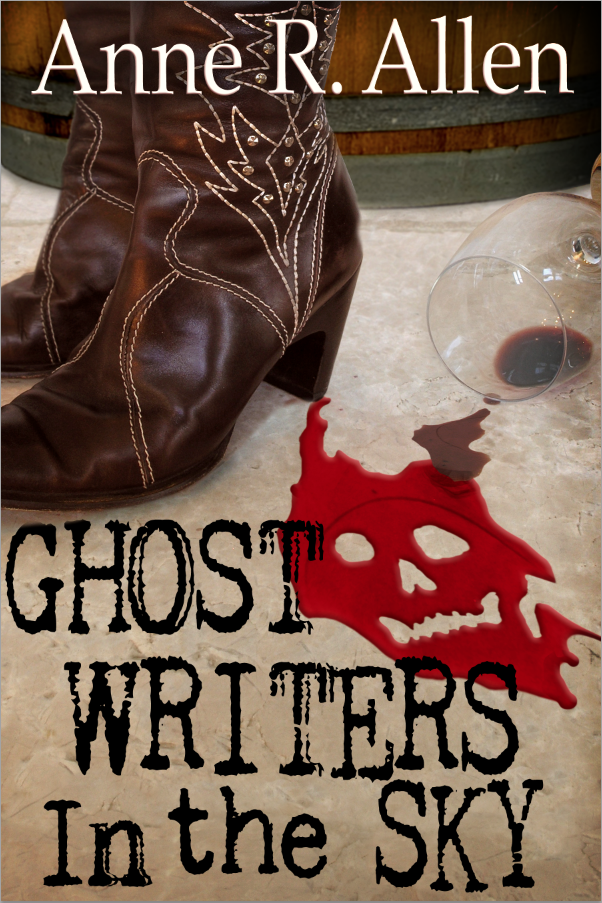
"The Best Revenge, Ghost Writers in the Sky and Sherwood Limited are hysterical. Anne Allen will keep you laughing throughout, but in the meantime she dabbles her fingers in some topics worth some serious thought: sexism, weightism, lechery, murder, duplicity, homelessness & poverty to name a few. If you love to laugh, you'll like these three books. If you love to think, ponder AND laugh, be ready to fall in love"... C.S. Perryess

This week I'm a guest at Morgen Bailey's award-winning blog, in the glow of her "Author Spotlight". I talk about some of the misadventures that inspired my novels, and that bonfire I made of all my old rejection slips last year....

OPPORTUNITY ALERTS:

1) A site for KOBO READERS: TrindieBooks.com This Canadian site is the KindleNationDaily for Kobo. Really nice folks, affordable rates, and their ads are FREE if your book is free for Kobo. Reach some of those voracious Canadian readers. Kobo is the most popular ereader in Canada.  Submit your book here. 

2) Escargot Books is expanding its catalogue and are now accepting submissions. Crime fiction (dark thrillers to cozies), women’s fiction, wealth and fitness, children’s, sci-fi and dystopian. All books will be published in digital format. Some books will be chosen for print and/or audio as well. Escargot Books does not offer an advance, but they offer higher royalties than traditional publishers, especially for direct sales from our website, as well as editing, formatting, promotion, and the company of bestselling authors. They have some big name authors and a good track record. Here’s their online submission form

3) The Lyttoniad contest for the WORST first sentence of a novel. This classic Bulwer-Lytton "Dark and Stormy Night" contest makes news every year. Each entry must consist of a single sentence but you may submit as many entries as you wish. E-mail entries should be sent to Scott Rice at srice@pacbell.net in the body of the message, Ariel 12 font. One e-mail may contain multiple entries. Entries will be judged by categories, from “general” to detective, western, science fiction, romance, and so on. There will be overall winners as well as category winners. No prizes that I know of, but lots of admiration from your fellow writers.  Deadline is June 30th.

4)  The Huffington Post's Huffpo50 is now publishing short fiction!   The rules: You must be 50 or older to enter. Writers can submit only one story per year, and all pieces must be 5,000 words or less. Send your original submissions, as well as your contact details, to 50fiction@huffingtonpost.com.

5) COMPOSE Literary Journal debuted last month. Submissions are open for their Fall 2013 issue.  This prestigious journal was founded by Suzannah Windsor, of Write it Sideways, and she's put together an amazing editorial staff. I'm so honored to have my poem No One Will EverLove Him included in the debut issue. They are looking for art and photography as well as poems, literary short fiction, novel excerpts and essays. Must not be previously published (that includes anything that has appeared on your

We love your comments! If you can't get through Blogger's hoop-jumping, send me an email at annerallen dot allen at gmail dot com and I'll post it personally. 


Update: July 14, 2013.


It seems the critically acclaimed detective novel,
The Cuckoo's Calling was written by J.K. Rowling under the pseudonym Robert Galbraith. Here's an article in the Telegraph with details about the new revelation.  It got great reviews, but didn't sell much. But since the revelation, it's zoomed to #1 on the bestseller lists. Here's what Nathan Bransford said.

"...people are missing one of the other important illustrative elements of this story, which is that The Cuckoo's Calling was not a great commercial success. It had sold only 1,500 copies in Britain. Despite all those glowing reviews and being published in a commercial genre, it didn't catch on."

So the pen name got her kudos, but she needed to be J.K. Rowling to make the sales. Branding is all. Looks as if I was right when I wrote this last fall. 


J.K. Rowling, the richest, most successful author on the planet, has been getting some pretty terrible reviews for her new novel, The Casual Vacancy. I won't quote them here. I think the Guardian's dismissal of it as "Mugglemarch" is probably one of the kinder ones.

A number of readers weighed in on The Passive Voice blog about it, and author Mary Sisson left this comment " If I were her I would have released this under a different name. All anyone is going to do is compare the book to Harry Potter, and then get upset because it’s not Harry Potter."

Other commenters agreed, saying things like,"The trouble with writing a series of such staggering success right off the bat is that inevitably everyone will be saying, 'It wasn’t as good as Harry Potter'."

But in the first three weeks, The Casual Vacancy has sold over one million copies.

So what if she had published it under another name, and kept the publishers from leaking her real identity? Would anybody be buying a pricey book with a ho-hum cover, bad formatting, and an unenticing title--from first-time author, Jo Nobody?

Or what if she'd started from scratch with a new identity, querying agents and editors like the rest of us? I haven't read the book, but I did look at the "peek inside" chapters on Amazon. I don't think the opener would have made it past most of those interns who read agents' slush piles these days. She breaks almost every one of the standard rules for novel openers: She's got a "Robinson Crusoe" opener with a lone character getting up in the morning, musing and flashbacking on page one. Then she kills off the P.O.V. character on page two.

Does that mean I won't read it?

Nope. I can't wait to get my hands on it.

Why?

Because she's J. K. Rowling, one of the world's greatest storytellers.

But if I heard the same stuff about Jo Nobody's book? I probably wouldn't bother.

So for me, the J.K. Rowling brand is the reason I'm going to read the book. And I'm pretty sure it's what motivated most of the million-plus buyers.

A pseudonym might have kept Ms. Rowling from getting those scathing reviews, but would it have got her any sales? Would it have kept her from being published at all?

It certainly would have kept The Casual Vacancy from that central spot in my local supermarket--usually reserved for exciting specials on seasonal Oreos and sugary cereal--instead of the back corner where they put their sad little shelf of books, along with the day-old bread and giant bags of dog food.

So what does this all mean for us mere Muggles? Should we use pseudonyms or not?

Lots of popular authors have done it. Stephen King sometimes wrote as Richard Bachman (complete with a phony book jacket photo reputed to be his agent's insurance agent.); Romance goddess Nora Roberts writes thrillers as J.D. Robb, and Dean Wesley Smith and his wife Katheryn K. Rusch write under dozens of pen names between them.

In fact, D.W.S. thinks authors who DON'T use pseudonyms are lazy and egotistical. He gives "not using a pen name" as his seventh way of "Killing Your Sales One Shot at a Time".

In another post, he gives the following reasons for using a pseudonym:  (I've paraphrased here.)

1) You write "too fast" for traditional publishing and you're only allowed one book a year under your current contract.

2) You want your readers know exactly what to expect from your brand (s).

3) Your writing might adversely affect your day job. (You're a youth minister who writes hard-core erotica.)

4) Your sales didn't live up to your publisher's sales expectations. (You've been told you'll never write in this town again.) 

5) You have family issues (You're telling the thinly disguised story of your Uncle Charlie's secret life as a cabaret singer named Chardonnay.)

6) Your real name is Stephen King.

7) You think this book isn't "good enough" for your brand.

8) You're writing work-for-hire in a branded series (Such as a Star Trek novel.)

Reasons #3, #5 and #6 are excellent arguments for writing under a name other than your own, but not for using MULTIPLE pen names.

Reasons #1, #4 and #8 only affect authors who are bound by old-school publishing contracts. These days, if you want to write fast, or don't fulfill your publisher's outsized expectations, you can simply self-publish. You can build on the brand name that you established as a traditionally-published author instead of going back to square one with a new name.

That leaves #2 and #7. Quite frankly, I don't get #7. Going to all the trouble of building a separate brand for a book you aren't proud of makes no sense to me. If the book isn't working, get an editor or collaborator or put the thing in a drawer and mine it for characters and short stories. I have at least a half dozen of them.

So the only compelling reason for MULTIPLE pen names is:

#2: You want to let readers know exactly what to expect when they pick up a book with that name on it.

But I feel you can show genre in other ways, like cover design. And you can put helpful text on there like, "Romantic Suspense by ..." or "A [Sleuth's Name Here] Mystery by..." in your metadata and cover text.

Even Dean Wesley Smith himself admits "sometimes readers will follow across genre lines. Give them the chance on a main website under a main name."

Certainly readers are crossing genre lines with J. K. Rowling. And other successful contemporary authors are luring their readers to cross those boundaries, too. Neil Gaiman writes everything from social satire to MG fantasy—and penned the screen adaptation of Beowulf--all under his own name. Literary prize-winner and Iowa M.F.A. Justin Cronin has recently moved from literary to horror with great success with The Passage.

Writing in multiple genres under one name is not a new idea.
  • Carl Sandburg wrote everything from poetry to historical biography to children's stories—all under the same name. 
  • Isaac Asimov famously wrote in "every category in the Dewey decimal system." 
  • Mary Stewart not only invented contemporary romantic suspense, but wrote some of the best high fantasy ever. 
And it may be that the digital era is changing things back to the way they were in earlier days. J.K. Rowling's success seems to show that brand trumps genre in today's world.

(And it also apparently trumps bad reviews.)

Plus the new publishing paradigm is blurring genre lines. And these days, position in a brick and mortar bookstore isn't the primary factor in selling books--name recognition is.

Writing in The Passive Voice comments on August 6th, epic fantasy author Tom Simon said:

"I’m highly suspicious of that advice about using pseudonyms for different genres; it may only be an artifact of the circumstances in which it originated. All data older than about three years is basically irrelevant to the new publishing model. It may be that the old advice still holds good — but if it does, it will have nothing to do with the original reason behind it. I would be very wary of assuming that the old practice is applicable in the new circumstances."

And: (my bolding.)

"I have not heard that anybody ever got mad because they bought Asimov’s Guide to Shakespeare and thought it was a science fiction novel. But a lot of people bought Asimov’s Guide to Shakespeare who would never have heard of it if it hadn’t been for Asimov’s SF. Note that Asimov built his reputation in the days before chain bookshops and computerized ordering — in other words, before multiple pseudonyms became useful as a way of gaming the system. It may be that the situation nowadays is more like the situation in 1965 than that in 2005."

Echoing his sentiments, author D.G. Sandru said in the same thread:

"Once you’ve got an author brand built, you can take it anywhere….Nowadays in the virtual book store at Amazon, with millions of titles, with millions of author names, for unlimited time, having a different pen name will diffuse your brand name. I’m in the process of writing a paranormal thriller and a true story. What are the chances that people that read my YA Fantasy under D.G. Sandru will find my other two books under two different names? Very slim. I would have to make three marketing efforts for three different names. Or instead of dedicating 100% to one brand name I would dedicate 33% to each pseudo name."

But another successful self-published author is very much in the Dean Wesley Smith camp. Regency romance author Anne Gallagher has recently published her contemporary women's fiction under a new name: Robynne Rand.

I understand her reasoning: her Regency brand is strongly traditional. She might lose readership if Anne Gallagher readers pick up a racy Robynne Rand novel and get offended. The same is true for most authors who write erotica as well as another genre.

Because pseudonyms are working for her, I asked Anne to weigh in on this discussion.

Why I Use Multiple Pen Names
by Anne Gallagher/Robynne Rand

ARA: Why did you decide to write your novels under different names?

AG: I built my "brand" writing Regency romance under Anne Gallagher. I write sweet historicals (no hanky-panky). My romantic women's fiction under Robynne Rand is contemporary with swearing and adult issues. There's a marked difference between the two and I didn't want to offend anyone (my Aunt Elsie comes to mind) if they picked up Remembering You and thought it was going to be a light read like The Lady's Fate.

ARA: Are you finding that marketing yourself as two different people takes more time from your writing than you'd like? Is one name taking more time than the other?


AG: Marketing under either name has always been a problem for me. I don't like tooting my own horn and any kind of promotion/marketing does take away from writing time. Robynne Rand is definitely harder to market. Even though it's still me, Robynne Rand is a newbie author. She doesn't have a huge fan base, (although my reviews are excellent) and I can't bang out books one right after the other like I do with my historicals. In writing historicals, there's a formula (more or less) I can follow. With my contemporaries, they're more complex, involving a deeper character arc. And truthfully, that's really the #1 marketing skill, just keep writing, keep publishing. A fan base will follow.

ARA:What are the benefits of writing under a pseudonym?

AG: If branded correctly, people know what they're getting when they pick up your book. For instance, I love Nora Roberts. I know who she is, what she writes, and I'll read anything by her. I had no idea she was J.D. Robb for about a decade. And though I like her Robb books, I won't go out of my way to buy one. I'm just not into the genre.

When people pick up an Anne Gallagher book, they know it's a Regency with a predictable HEA (Happy Ever After ending--ed.)  I didn't want to confuse people thinking they were getting one thing when it was definitely another.

ARA: Do you have any advice for authors who are trying to decide whether to write under two or more names?

AG: Build your brands differently. Market yourself as two different people. If you look at my Anne Gallagher blog you'll see a lovely young lady reclining on a chaise under a blanket of blossoming trees. All very calming, looking very historical-ish. If you go to my Robynne Rand blog it's totally different, contemporary with a shot of the Mount Hope Bridge in Rhode Island.

And start as soon as you know you've chosen that route. My mistake was not starting the Robynne Rand blog sooner, before the book came out. Or getting on Twitter sooner. Not that Twitter spam sells books, but at least my presence there may have allowed people to get to know me a little better. They might not buy this book, but they might buy the next.

ARA: I guess I'm lucky to have a muse who pretty much writes in one genre. No matter what I've tried to write in the last three decades, everything turns out to involve murder and mayhem combined with fairly cerebral romantic comedy. When you pick up an Anne R. Allen mystery, you know there will be a screwball romance, some darker literary subtext, and probably at least one villain attacked with a designer shoe.

I suppose Dean Wesley Smith would say I'm just too lazy to write steampunk erotica, space westerns, and techno-thrillers in my spare time. However, this does mean I personally don't have to worry about pen names.

I do understand why Anne/Robynne made her choice. If I were in her shoes, I might have made the same one. But I recommend every author carefully weigh the pros and cons. It takes a crazy amount of work to establish even one brand these days and I'm all about writers keeping their sanity.

Book-buying habits are changing. I think the "different names for different genres" paradigm does belong to old-style publishing. Readers are beginning to "get" the new/old way of doing things.

I think if PEN/Hemingway Award winner Justin Cronin had published his horror novel under a pseudonym, he'd never have got the major ink in the New York Times that sets his work apart from every other vampire novel.

And if Jo Nobody had written The Casual Vacancy, I doubt Ann Patchett would have interviewed her in front of a crowd at Lincoln Center who got so excited that Ms. Patchett said she was "going to have to hand out sedatives."And certainly Jo Nobody wouldn't get to go on the Daily Show and convince Jon Stewart that the U.S. needs a monarch.

And I doubt she'd be working on her second million in sales in less than a month.

Personally, I'd rather tough out the bad reviews than give up the perks of an established brand. (Even if my brand doesn't quite have J. K. Rowling's clout.) But I'd love to hear from writers on both sides of the question in the comments.

Do you write under multiple names? Do you think it's worth multiplying your marketing work in order to keep from offending some readers? Have you written in different genres under the same name? What kind of results did you have? Do you know of other authors who have written in multiple genres with the same name?

99 cents for limited time!
BOOK NEWS: For some reason unknown to me or my publisher, Amazon AND Barnes and Noble have chosen to reduce the price of my first Camilla Randall mystery, THE BEST REVENGE, to 99 cents. Practically FREE! So if you've wanted to check out one of my rom-com mysteries and you like a bargain--here's a chance to grab one cheap. you can find it on Amazon US , Amazon UK, and Barnes and Noble. Somehow it seems to have disappeared from Kobo. The ways of the Webz are mysterious indeed. But we will be trying to raise the price back to $2.99, so grab it while you can.

I WILL BE ON THE RADIO on Thursday evening, October 25th, 8 PM Pacific Time, talking with award-winning author Elaine Raco Chase on Triangle Variety Radio. Just click on the Triangle link and listen on your computer. I'll be talking about the real-life Hollywood mystery behind my mystery novel, THE GATSBY GAME, which is supposed to finally be available in paper this week. It isn't yet, and nobody knows what the hold-up is, but I've seen the proof and it's very nicely done. But as I said, the ways of the Webz are a mystery to us all...

If you're having trouble commenting, email me your comment at annerallen dot allen at gmail dot com and I'll post it. I've had to block anonymous comments for a bit. I was getting over 1000 anon. spam comments a day and even though they didn't make it onto the blog, they were all landing in my email box. I was getting carpal tunnel syndrome deleting them all.

Also email me if you'd like to subscribe. It looked as if Feedburner was working for a while, but now it's on the fritz again.

Next week: Ruth Harris will give us 8 super-useful tips for improving your book. A must-read.

Confessions of a Former Query Addict


Happy 2012! 

What a year it’s been. Exactly a year ago, I woke on New Year’s Day to one of those emails that used to flood my brain with a mix of adrenalin, serotonin, and hope—a burst of euphoria that somehow made my life of constant rejection bearable. It’s a high only an aspiring author knows.

There it was in my inbox on New Year's morning—a positive response to a query I’d sent to an agent months before: 

 “Your writing is delightful, and your characters are original and inviting. I would cheerfully read anything you wrote. I think you’re very talented…” I started to squee and do a happy dance.

Then I read on. It was a no.

The agent was turning it down because “the market has become unforgiving of the isolated well-written mystery. Series do better.”

But…it was one of my Camilla Randall mysteries! The only reason I hadn’t mentioned it is I knew a querier shouldn’t mention more than one book at a time. A major no-no. So I wrote back, groveling, saying the book was indeed part of a series—would she, pretty please, like to read book one?

Two days later I got a yes. I sent off the ms. for The Best Revenge.

...and never heard another word.

For all I know, the manuscript is still sitting in some unpaid intern’s e-slush pile.

I continued on this hamster wheel for another—I hate to admit this—eight months, sending out query after query to every agent who’d ever sold a mystery like mine. This on top of four previous years of query hell. Yes, that adds up to nearly five years. (My first publisher went under in 2006.)

And before I found that publisher, I’d spent much of the late ’90s and early ’00’s doing the same thing. Several queries took, and I was represented for much of that time, so instead of query hell, I’d lived in submission hell—another neighborhood in the same arrondissement of Hades, with slightly more prestigious real estate.

It was like being addicted to a drug. Those few “yes” responses--a request for a partial here, a full there, an "I love this, but..." glowing rejection--gave me the highs that kept me going and going, hoping for that one big score.

But I was saved by an accidental intervention by three people: my blog partner Ruth Harris, editor Les Smith at Popcorn Press, and author/editor/international entrepreneur Mark Williams at MWiDP.

Ruth’s comments here on the blog and elsewhere were my first wake-up call. Here was a bestselling author whose work I loved, who had made it to the pinnacle of writerly success—the New York Times bestseller list. She’d also been an editor at several of the Big Six houses. And she’d walked away from all of it in order to self publish. I had to admit maybe there was something to this indie thing.

Then I heard from Popcorn Press—a small indie publisher whose editor liked my blog, admired my professionalism, and wanted a look at my backlist. It took me a few months, but finally I offered them my two backlist titles.

But for my three new titles, I was still jonesing for that big score. I clung to hopes that my latest—the Hollywood mystery, The Gatsby Game—would finally land me an agent. I figured since it offered a solution to one of the ten most notorious Hollywood mysteries of all time—which is still unsolved—New York might see some potential money in it.

In September, I finally got that offer I’d been dreaming of for five years. Here was my big score--an offer of representation!

But it came with an astronomical price tag. The agency wanted a total rewrite. Not an edit. A tear-it-up-and-start-over rewrite. I was going to have to eliminate all mystery elements, humor, gay characters, and ties to the real Hollywood scandal. They wanted a simple, Harlequin-type romance.

Not only was I going to have to give up the story I’d been aching to tell for decades, I was also going to have to erase my own personality: squelch all my Dorothy Parker snark to become Barbara Cartland-sweet

It took me three days, but I finally had to admit the price of that fix was too high.

Enter Mark Williams. He had read Sherwood, Ltd as a favor, to check for the accuracy of my Brit dialogue. He loved it. And it seemed he was starting a new international publishing venture. He made me an offer on all three books—to launch before Christmas.

By Christmas.

Not maybe-get-an-agent-someday and possibly-publish-three-years-later-if-you're-really-lucky. He wanted to publish all of my new books in the next three months. He also wanted quite a bit of editing (Les at Popcorn wanted some, too.) But these were real edits: aimed at improving the books, not just wedging them into some marketer’s wish list. Still, doing them in that time frame--while promoting the other books--seemed deeply bonkers.

I said yes anyway.

The last three months have been a brain-frying marathon, but somehow, all five books were e-published between Sept 28th and Dec. 28th.  An amazing example of teamwork. Thanks Les and Mark! Look what we did!


I also must to thank Laura Morrigan of Covers by Laura, Megan Derico of Derico Photgraphy and Katheryn Smith at Popcorn for designing such fantastic covers.

All five novels should be available in paper early this year from Popcorn. I love the quality of the paper copies Popcorn has done for Food of Love—while keeping the price under $10. I hope they’ll be able to do the same for the others..

And I also have to mention the two anthologies that came out in the same three months. Saffina Desforges Presents, from Mark Willams and co. and Indie Chicks from the fantastic group of independent women authors brought together by the hard-working Cheryl Shireman (to read her inspiring piece, check out my INDIE CHICKS PAGE

And I owe a huge amount of thanks my wonderful blog partner, Ruth Harris, for keeping this blog going while I was going a little nuts over the past three months. (OK, a lot nuts.)

Am I saying you should all stop the agent query process and start looking at small publishers? Not at all. For one thing, you generally have to query them, too. And if you’re considering that route, remember small publishers vary wildly. Read the contract carefully and have it checked by a lawyer or publishing professional. They should be offering a much better royalty than Big Six, because there will be no advance.

The biggest drawback with a lot of small publishers is the price of the books to consumers—often close to $20 for a paperback. It’s very hard to sell many units at that price. Ditto high-priced ebooks. Anything over $5 is a very hard sell for a non-name author, so be sure to check a publisher’s prices before you query.

But for me, this route has been like getting off a drug that was killing me. There’s a saying attributed to everybody from Freud to Einstein (but probably penned by Rita Mae Brown) that says “the definition of insanity is expecting different results from the same behavior.”

That’s what I was doing, sending out those endless queries.

From that agent’s rejection I got a year ago today, I should have realized I wasn’t on the right path. Nothing was wrong with my writing, but my work was never going to fit into the wish lists of the Big Six, who are increasingly focusing on a younger demographic.  

But readers are another story. I’m building momentum with steady sales, and when MWiDP offered The Gatsby Game free for four days on the KDP direct plan last week, it hit #40 in contemporary fiction and got over 2500 downloads. And now The Best Revenge is climbing the charts.

I'm not against the query process. I still think most new writers benefit from it, and it's still the most reliable path to a professional writing career. But we also need to know when to quit and try something different..

If you’re young and write YA, especially steampunk or another trending genre, there’s a very good chance you’ll land an agent and maybe even a contract with a Big Six publisher. But if, like me, you’ve built up solid inventory and are getting the same “this is beautifully written, but…” results, it may be time to give up the query addiction and take charge of your own career.

And maybe next year, instead of waking up to one more close-but-no-cigar rejection, you’ll have a bunch of your very own titles on Amazon, available to readers and actually making you some money.

And maybe you’ll even get some good reviews, which are a better high than even a request for a full manuscript. Seriously--way better. I am lucky enough to have had some fantastic reviews from people whose opinions I value highly, like Irish author Gerry McCulloughCanadian reviewer Benoit Lelievre at Dead End Follies Regency Romance author Anne Gallagher, and Book Blogger Donna Hole  Many thanks to you as well as all the other wonderful readers who have left such great reviews on Amazon and Goodreads.

For a great overview of this tumultuous year in publishing, I recommend David Gaughran’s superb wrap-up post on what happened in self-publishing in 2011.

And if you’re considering indie publishing, read Kristen Lamb’s wonderful post on the subject last week.

How about you, scriveners? Have you ever been addicted to the query process? How long do you think a person should keep querying before they look for another path?

Click Here to go to the Fair
This week I’ll be joining in Susan Kaye Quinn’s Internet Indie Book Festival. She’ll be providing readers with a look at some brand new indie titles for your new Christmas Kindle (I got mine! Love it!) Stop by for a look at some great new, affordable books that were released in November and December.