• RSS
  • Delicious
  • Digg
  • Facebook
  • Twitter
  • Linkedin
  • Youtube
Showing posts with label Publishing scams. Show all posts


The Oxford dictionary says the word "anthology" comes from a Greek phrase meaning a collection of flowers. I love that image. An anthology is a place to display literary or musical works that have been chosen to work together—like a floral bouquet.

Only 99c!

I've had the privilege of contributing to seven great anthologies over the past few years. The latest, a collection of personal essays from a broad spectrum of successful authors, debuts this month: Indiestructible: Inspiring Stories from the Publishing Jungle.

It's especially empowering for writers thinking of going the self-publishing or small press route. But all writers will enjoy the stories of authors' struggles and successes on the road to publication. It's a wonderfully inspiring book—and only 99c!


Anthologies have long been one of the best ways for a new writer to get publishing credits and start building an audience. They're also a great way for an established author to increase visibility. Collections of short personal essays do especially well, but theme anthologies that include fiction and poetry are strong sellers, too, and their popularity is growing.

Unfortunately, anthologies have got themselves a bad name among a lot of savvy people in the industry, because so many vanity publishers and scammers have used them to bilk naïve writers.

Here are the types of good and not-so-good anthologies you may encounter:

Scammy

The Vanity Anthology

The vanity poetry anthology has been around for at least half a century. I remember when a sweet older poet in my town got so excited by her "acceptance" that she sent out press releases before she realized she'd been had.

The operation works like this: writers are invited to enter a "free contest" with a "prize" of inclusion in an anthology. Thing is, every piece entered gets accepted and the books cost $40 or more. So for $40 a copy, you get the privilege of seeing your work crammed into a huge book with a boatload of dreck. As Joe Konrath says, "Do the numbers. If there are 3000 poems in the book, and each writer in the anthology bought at least one copy, the publisher made $120,000."

Poetry dot Com was a famous vanity anthology outfit that flourished in the last decade. (The domain name has been bought by Lulu, where they're attempting to rehabilitate the brand.)

The Pay-to-Play Anthology

The bogus poetry anthology is bad, but there are other, even nastier scams out there. Victoria Strauss at Writer Beware tells of two vanity anthologies who have bilked writers out of up to $5000 each in what she calls the "pay to play" anthology scam. These anthologies of personal essays often mimic the highly successful Chicken Soup books, but instead of paying you, they expect you to pay them. Lots.

The Wake Up…Live the Life You Love series publishers boasted they included articles by well-known inspirational speakers like Dr. Wayne Dyer...but the pieces were simply reprints of old articles. Then they required contributors to buy up to 500 books each at a cost of several thousand dollars.

Another series, published by Inspired Living Publishing, required contributors to pay big bucks for worthless “marketing packages” as well as a huge number of overpriced books.

Always check Writer Beware before you sign on the dotted line.

However, most anthologies are fantastic venues for your writing. There are many good ones, both in print and ebook.

Great Opportunities

The Traditionally Published Inspirational Anthology

These are a boon to newbies. The venerable Chicken Soup for the Soul anthologies and their cousins are an excellent way to start a professional writing career. (Alas, the Cup of Comfort series from Adams Media has quit production, and I see McAfee blocks their old site as dangerous, so don't go looking for them.) These collections usually pay a flat fee for a personal essay, plus a generous number of copies.

Acceptance can be a big ego boost, and it's a nice credit for your query letter or author bio. (Authors planning to go indie should work on getting credits, too. They show you have a body of work that has been vetted, which helps you stand out from the crowd.)

The Traditionally Published Fiction or Poetry Anthology

Right now, short fiction anthologies are trending. Short fiction is ideal for reading on phones and tablets. For more on the new popularity of short fiction, see my posts, Short is the New Long and Why You Should Be Writing Short Fiction.  and a piece in praise of short stories in BookRiot this week.

Because of all this, some publishers are bringing back vintage short fiction in new collections. This week, Sarah Weinman's compilation of vintage Ellery Queen stories, Troubled Daughters, Twisted Wives: Stories from the Trailblazers of Domestic Suspensemakes its debut from Penguin.

Publishers often put together an anthology with a theme and issue an open call for submissions. They usually pay a flat fee for first rights and may also give copies.

C. Hope Clark's Funds for Writers and Poets and Writers classifieds are good places to find vetted anthologies looking for submissions.

A few years ago, I found a call for submissions from the Silver Boomer press in Hope's newsletter and sold a poem to the anthology: From the Porch Swing, Memories of our Grandparents . I got paid and became a "published poet" at a time I couldn't give my fiction away. An excellent experience, (although I might have wished for more colorful cover.)

The Indie Fiction Anthology
Indie publishers often put together short story anthologies to showcase their clients' work. The Saffina Desforges Presents Coffee Break Collection is a showcase of MWiDP authors. Inclusion helped me get the attention of fans of their better known authors when I first signed with them.

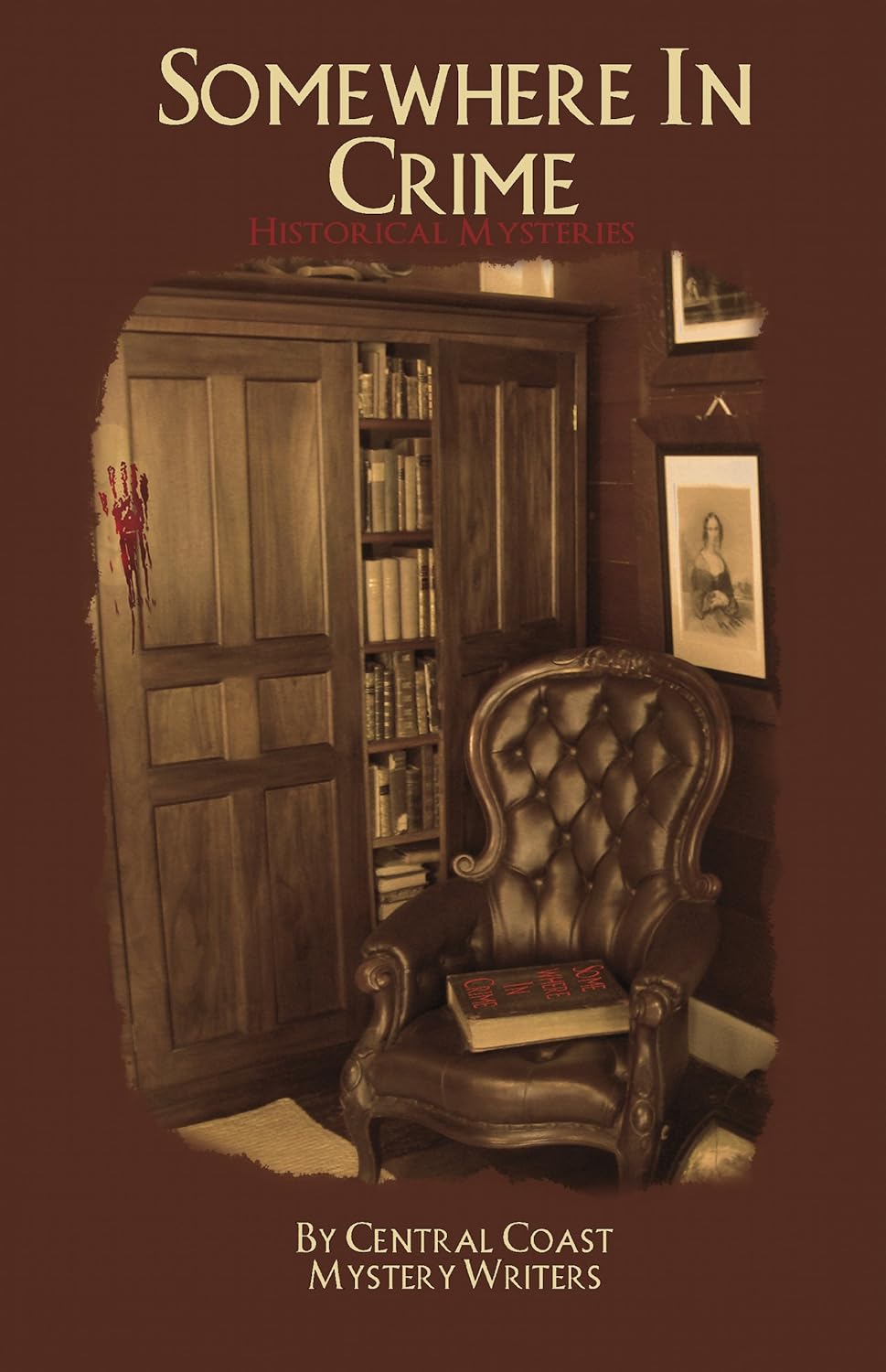
Genre groups like Sisters in Crime sometimes put together themed anthologies like Somewhere in Crime, a collection of historical mysteries written by the members of the Central Coast Sisters in Crime chapter. It's a fantastic collection by some of the area's best crime writers.

These days, a launch party for a single title isn't terribly cost effective, but launching an anthology for a large group of local writers gets on the local news and can garner everybody more visibility on their home turf. I didn't have time to contribute to Somewhere in Crime, but I got to go to a great party and buy a wonderfully entertaining book.

Sometimes indie authors get together to put out a theme ebook anthology like the WG2E Martini Madness. Since I happened to have a story on hand about drinking appletinis with an alien, I rushed to contribute to that one.

The overhead on an ebook or POD anthology is much less than the old print anthologies so they're cheaper to put together—and they showcase all the authors to each others' fans

The Charity Anthology

Charity anthologies are hot. These are the ones where you donate your work and the proceeds go to a good cause. Both small publishers and self-publishing collectives have had success with these. Jump on the chance to be included if you get an invitation. No, you won't make any money directly, but you'll get a huge amount of free publicity and exposure to new readers.

Plus you're doing a good thing.

Also, a charity anthology saves the editorial staff the paperwork headaches trying to get small royalties to dozens of people. It's win/win. Just make sure you run it by the charity first to make sure you can use their name.

Author Paul Fahey—former editor of Mindprints magazine—put together an anthology of essays by well-known LGBT authors called The Other Man, published by JMS publishing this summer. It is getting fantastic coverage in the trad print magazines as well as online. Many of the contributors are well known, established authors. Profits go to the "It Gets Better" project that helps bullied LGBT teens. (I personally recommend this one for readers who don't mind a little "R" rated content. Every essay is fascinating—and what a great cause!) And it's 40% off on the JMS site this weekend.

Probably the most successful charity anthology I've been involved with was the inspiring Indie Chicks Anthology of personal essays by independent women authors, which donates all its proceeds to breast cancer research. I'm sure the Indie Chicks are partly responsible for the success I'm having now. The anthology included some of the top indie authors in women's fiction, mystery, and romance. Since they invited
me just as my first novel Food of Love was being republished in 2011, I got a ride on their coattails. Their many fans read my piece and checked out my work. I'm very grateful to this terrific group of women.

I'm also grateful to the (now disbanded) Literary Lab, who accepted my work for two of their anthologies: Genre Wars and Notes from Underground at a point when my fiction writing career was stalled and I was starting to despair. Proceeds went to literacy charities. Not only did I get my work into print again and put my name back into the marketplace, but I met a group of awesome writers who were supportive and helpful at a low point in my career.

Now it's four years later and I'm totally jazzed to be included in Indiestructible with some of the authors who appeared in the Literary Lab books. It also includes a number of authors who frequently visit this blog. It gives 100% of proceeds to BUILDON.org, an international movement which breaks the cycle of poverty, illiteracy, and low expectations through service and education.

Indiestructible brings together the experiences of 29 indie authors—their passions, insights, and successes—to help new authors who are trying to decide if they should make the leap into indie publishing.

It's not a how-to guide, but it gives you first-hand information to help you on your journey.

The editor of Indiestructible is author Jessica Bell, whose blog, the Alliterative Allomorph was one of the first blogs I followed when I ventured into the blogosphere.

Remember how I keep telling you networking on blogs will help your career? This is one of the ways. Invitations to six of the seven anthologies came to me through people I met on blogs.

Or you could try putting together an anthology yourself. If you know a group of writers who write in a similar genre, whose work you admire, think about asking them to join you. It's hard work, but if everybody works on the marketing, you can reach a huge audience you'd never find on your own.

What about you, scriveners? Have you ever contributed to an anthology? Was it a good experience? Have you ever been scammed by one? Have you discovered new authors reading anthologies? 

This week: I'm visiting Canadian author June McCullough to talk about my upcoming books any my own favorite characters. (And thanks, my Canadian fans, for making the Camilla boxed set #16 in single women's fiction this week!)

This month: while I recover from some surgery that's turned out to be a bigger deal than I expected, we'll have a parade of superstar guest posters:

September 8th: Catherine Ryan Hyde, a literary icon who reached #1 author status on Amazon this summer—she even knocked J.K. Rowling off her perch—will talk about rejection: what it means and what it doesn't.

September 15th: Alex J. Cavanaugh, sci-fi author, blogging ninja, and one of my fellow Indiestructible contributors, will post about forming a blog community, something he knows a lot about.

September 22nd: The blokes from EBookBargainsUK will tell us about the vast, untapped international market every indie needs to know about. (BTW, EBUK has had some technical difficulties this weekend but should be up and running by next week.)

September 29th: Our own NYT bestseller Ruth Harris is back in her regular spot, talking about how to protect yourself from writing scams.

On a personal note: For those concerned about my health, the lump they removed was benign and I'm going to be fine. I just need more time to heal.

It's been complicated by the fact I broke my own rules recently and let my inner Atticus Finch speak up at an ill-advised moment. (Never try to reason with rageaholics: you're only volunteering to be their next fix.) A legal team who monitors online hate groups informed my publishers I've been marked to be targeted with negative reviews and other harassment. So if you see any trollish comments here, ignore them—don't make my mistake and respond—and I'll delete ASAP.

And please, anybody who has read and enjoyed the humor of the Camilla Randall Mysteries, if you could take the time to write a genuine review on Amazon—I desperately need your help. It would make all the difference. Only a couple of sentences are necessary and all that's required is to be an Amazon customer. Waking up every day to a new nasty review by some "reviewer" who only repeats what other negatives has said and has never reviewed anything else gets pretty discouraging.

Bonus: any English major who notes in a review the parallels between the first Camilla book and Fanny Burney's 1796 novel, Camilla, a Picture of Youth, gets your choice of any of my books—paper or ebook—free.

Book Deal of the Week

The fourth Camilla Mystery, No Place Like Home 
99c for one more week on Amazon US, Amazon UKAmazon CA etc.


It's #4 in the series, but reads as a stand-alone.

"A warp-speed, lighthearted comedy mystery, No Place Like Home offers lasting laughs beneath which a message resounds – Being homeless is scary. 

There’s a dastardly dead husband, a Ponzi scheme, a long-lost love, a new love who keeps vanishing and a tiny dog named Toto. Add a cross-dressing hooker and a Colombian drug cartel, and the pleasant little community Oprah named “The Happiest City in the USA” is revealed to be a bit more complex than the lady noticed.

The perfect read for the next time an escape from everything sounds like fun!"...Abigail Padgett

Opportunity Alerts

1) Quirk Books "Looking for Love" contest. They offer a $10,000 prize for the best quirky love story of 50,000 words or more. Visit the Quirk Books website to download the entry form or for further information. Quirk Books was founded in 2002 and publishes around 25 books each year. Their bestselling titles include Pride and Prejudice and Zombies and Miss Peregrine’s Home for Peculiar Children. Entries close October 1. 

2) Writer's Digest Popular Fiction Awards. Since most short fiction contests tend to favor literary work, this is a great one for genre authors. Choose your favorite genre and enter your best in 4,000 words or less. Six first prizes of $500 each and a Grand Prize of $2,500 and a trip to the 2013 Writer’s Digest Conference in New York City. Deadline September 16th

3) The Harper's Bazaar UK Short Story Prize is open to all writers. NO ENTRY FEE. Are you the next Dorothy Parker or Anita Loos? Submit an original short story (up to 3,000 words) on the subject of 'spring' to:shortstory@harpersbazaar.co.uk. The winning entry will appear in the May 2014 issue. Its author will be able to choose a first-edition book from Asprey's Fine and Rare Books Department to the value of £3,000 and enjoy a week-long retreat at Eilean Shona House, on the 2,000-acre private island off the west coast of Scotland where JM Barrie wrote his screenplay for Peter Pan. Deadline December 13th.

4) BARTLEBY SNOPES WRITING CONTEST - Can you write a story that's in dialog only? $10 ENTRY FEE A minimum of $300 will be awarded, with at least $250 going to first place and at least $10 to four honorable mentions. 5 finalists will also appear in Issue 11 of the magazine due out in January 2014. Last year they awarded $585 in prize money. For every entry over 25, an additional $5 will be awarded to the first place story. Compose a short story entirely of dialogue. You may use as many characters as you want. Your entry must be under 2,000 words. Your entry does not have to follow standard rules for writing dialogue. Your entry cannot use any narration (this includes tag lines such as he said, she said, etc.) Deadline September 15th


There’s much talk on the Interwebz about “Big Six, “small presses” and “indie publishing.”  But a lot of newer writers aren’t quite sure what these terms really mean.
None of us wants to sound dumb, so we usually don’t ask.
So I’ll pretend you did. (And thanks, Yumi, for asking about the word “indie” in the comments last week.)
Here’s a quick guide:
The Big Six

These are the six multi-national corporations that control most of the Western world’s publishing.
1.     Simon and Schuster
2.     HarperCollins
3.     Random House
4.     Macmillan
5.     The Penguin Group
6.     Hachette 
Two are American: Simon and Schuster and HarperCollins, (although Harper is a division of Rupert Murdoch’s NewsCorp, so it’s pretty international.)
Two are German: Random House is owned by Bertelsmann and Macmillan is owned by Holzbrinck.
One (Penguin) is British
One (Hachette) is French.
Some people include the Canadian Romance giant Harlequin when they’re talking about “big publishing” (which I guess would make them the “Big Seven.”)
Most books you see in stores come from the Big Six/Seven. They have hundreds of imprints with familiar names like Little Brown, Knopf, Viking, NAL, Pocket, Scribner, St. Martins, Dutton, Avon, William Morrow, Crown, Tor, Zondervan, Grand Central, Dell, etc. but they’re all owned by one of those six corporations.
In almost all cases, you need an agent to query the Big Six. There are a few exceptions, like Tor/Forge/Tom Doherty—which is a division of MacMillan—and some children’s divisions of the big houses.
Five of the Big Six—all but Random House—have recently run afoul of the US Department of Justice because of their attempts to keep the price of ebooks artificially high. A lot of people think this means the Big Six are doomed.
I’m not so sure about that. Multinational conglomerates tend to be rather good at hanging onto their trousers in a crisis.
But there’s no doubt the ebook revolution is changing the face of publishing. Most of the changes the Big Six has come up with recently have NOT been author-friendly, but maybe they’ll learn from their mistakes. (We can hope.)

Mid-Sized publishers (sometimes called “small” just to confuse you)

This covers a lot of territory, from university presses to big international operations like Canada’s Harlequin(see above) and the UK’s Bloomsbury (which has branches in London, New York, Berlin, and Sydney.)  
When mid-sizers are successful, they tend to be bought up by the Big Six. (Thomas Nelson, the largest independent Christian publisher, was bought by HarperCollins in 2011.)
There are many dozens of mid-sized houses. They often address particular niche markets. Here’s a sample list—by no means comprehensive
  • Kensington: Most genres except sci-fi and fantasy 
  • Llewellyn: New Age nonfiction and mysteries (under their Midnight Ink imprint)
  • Chronicle Books: Art, food, pop culture (and some illustrated fiction like Griffin and Sabine.)
  • Perseus Books: Travel and other nonfiction genres. 
  • Workman Publishing: Tends toward the literary. Imprints are Algonquin, Black Dog & Leventhal, Storey Publishing, Timber Press, Artisan Books, HighBridge Audio, Fearless Critic.
  • Sourcebooks: Formerly a publisher of financial guidebooks, it’s grown to include fiction in all genres in the last decade. 
  • Sunset: Gardening, cookbooks and how-to
  • Poisoned Pen: (Maybe on the cusp of small and mid-sized.) One of the largest mystery publishers.
  • F + W Media/Writer’s Digest Books: How-to 
  • Dorchester: Genre fiction. Now in bankruptcy. It was the premier mid-sized independent publisher of mass market paperbacks until 2010, when it suspended most paper operations and went to ebooks only (see below.) Its financial difficulties have given it a “not recommended” stamp from most writers’ organization. 
  • Titan Books: UK publisher of movie and TV tie-ins as well as graphic novels. Took on Dorchester’s crime fiction imprint, Hard Case Crime
  • Houghton Mifflin Harcourt: Textbook publishers (merged with the Irish company Riverdeep in 2008)
Most mid-sized publishers want agented submissions, but not all. Kensington still accepts unagented queries for all their lines (snail mail only.) Check websites for submission guidelines. Midnight Ink no longer accepts unagented queries, but some Harlequin lines do. Right now, they include Harlequin HeartwarmingKimani PressHarlequin Historical Undone, and Nocturne Cravings .
Here’s a database of midsized and small publishers compiled by Canadian thriller author Jack King .
NOTE: Mid-sizers tend to pay smaller advances and lower royalties (that includes Harlequin.) They also tend to be the most financially precarious. So expect some of these to go the way of Dorchester if they don’t keep up with the times.

Retailer/publishers

Amazon is a bookstore that has become a book publisher. It has a number of lines in different genres:
·       Amazon Encore: Reprints of self-published and out of print books
·       Amazon Crossing: Books in translation
·       Thomas and Mercer:  Thrillers
·       Montlake: Romance
·       47 North: SciFi
·       New Harvest: General Fiction—which will be published in conjunction with Houghton Mifflin Harcourt (see how convoluted this all gets?)

You need great sales as a self-pubber to be approached by Amazon’s publishing wing, but agents are also selling directly to Amazon.
Amazon has some of the most author-friendly deals around, BUT other bookstores are reluctant to carry their products because of the obvious conflict of interest.
Other online retailers like iTunes/Apple may follow suit.
Brick and mortar bookstores are also producing their own books. This isn’t new. City Lights in San Francisco has had its own publishing wing since 1955, but with POD technology, this may become a trend that will help bookstores stay alive.

Independent Ebook Publishers

These are new publishers like Ellora’s Cave and Samhain Press (with more start-ups all the time.) They publish primarily ebooks and usually appeal to a particular niche.
Expect to see more and more of these.
Because ebooks have low overhead, they can be more author friendly and often provide some marketing help for their authors. (Samhain is branching into print, although the bulk of their titles are ebooks.)
These generally do not require an agent for submissions. But because this is a new industry, check them out thoroughly and try to get referrals from satisfied clients.

Small Presses

These are sometimes called “indie presses.” (Ten years ago, this is what people meant by “indie” publishing, but now self-pubbers have kind of taken over the word.)
There are thousands of them. It’s hard to find useful listings because the number is never stable. They spring up and get knocked down like a literary version of Whac-A-Mole.
Some, like Beacon Press, GrayWolf, and Copper Canyon Press are prestigious and have been around for decades.
Some are regional and publish books specific to one area--like guidebooks and local history.
Others address niche genres, like Canada’s SciFi publisher Edge , and noir mystery publisher BleakHouseBooks, or New England Cozy specialist Mainly Murder Press.
They tend to focus on poetry and literary fiction, so if you're a literary writer, you may find your home here. Poets and Writers has a great database of literary small pressesFor more general list of small publishers, check the Writer's Resource Directory, curated by author (& friend of this blog) T.K. Richardson. It's a great resource for publishing info in general. 
Small presses are usually labors of love and nobody gets rich, but they’re often a good way to break in to print and lots of authors are very happy to stay with a small press where there is a more personal interaction with editors.
Authors are responsible for their own marketing and there’s generally no advance, but higher royalties.
These publishers generally don’t want to deal with agents—writers should query the editors directly. (Remember to check for submission guidelines on their websites.)
But beware: Check them out thoroughly with sites like Writer Beware and Preditors and Editors and if they’re not well-established, contact other clients before you sign. And always have a lawyer or publishing professional look at the contract before you sign.

Micropresses

These are a tiny version of the small press—usually one or two-person operations, generally oriented toward the literary. They often publish chapbooks of poetry. They operate on a shoestring, and are usually run as a hobby.
Often these are run by authors who are essentially self-publishers who also take on a few colleagues and friends. A micropress can be a friendly, supportive place for a writer to start out. But beware: they can also be clueless and unprofessional. There’sa horror story at Writer Beware this week about a writer who had her book rewritten without her permission by a “publisher” of this type.
Some of these can be a great first step into publishing, but look for red flags. Grandiosity, unrealistic promises, negativity about the industry, and bad spelling/grammar on the website are tell-tale signs.

Vanity Presses

These are publishers who make their money from services to authors rather from sales of books.
Before ebooks and POD (print on demand) technology, vanity presses were mostly pricey self-indulgences—although every so often a vanity-published book like 1990s phenomenon The Celestine Prophecy made it to mainstream readers.
Two of the best known of the traditional vanity presses are Vantage and Dorrance.
But as prices came down and self-publishing took off, the line between real publishers, printing services, and vanity presses has blurred. A lot of authors are taken in by vanity publishers posing as real publishers.
But others successfully use vanity presses as printers for self-publishing and--with a lot of promotion--make the bestseller lists with books like The Christmas Box and Legally Blonde. 
               The problem is, most vanity publishers overcharge for services so their books are too pricey to be profitable for the author. And there can be other problems. For instance, PublishAmerica ties up the author’s copyright for seven years. 
              But vanity publishers are not all scammers, and they can be useful for books that aren't produced to be profitable, like family histories and recipes, memoirs and poetry collections.
Here are some of the best known vanity publishers
·       PublishAmerica (aka Independence Books)
·       Tate Publishing
·       AuthorHouse (which has many imprints)
·       XLibris
·       iUniverse
·       Ivy House
·       Trafford Publishing
·       Poetry.com

Indie Publishing

True DIY publishing. You do everything yourself or hire somebody to do it for you. You can do this several ways:
·       Get help from a publishing facilitator like Smashwords or BookBaby, who for a flat fee will code your ebook and upload to different retail platforms and keep track of royalties. They also offer inexpensive cover design and other services.
·       Get shepherded through the process by an agent. A number of agents are actually helping authors become indie publishers these days—usually existing clients. Some industry purists consider this a conflict of interest, but the agented authors I know who have published through their agents have nothing but good things to say about this.
·       Hire your own private editor, cover designer, and coder and keep complete control.
NOTE: “Complete control” does not extend to Amazon. Author-friendly as it is, the ’Zon has glitches that can’t be controlled by anybody, apparently. Ruth Harris has been trying to get Amazon to post the correct book cover art on her Amazon author page for six months now, to no avail, and Saffina Desforges had her bestselling thriller Sugar and Spicedisappear from Amazon.co.uk for over a month with no explanation—when you’re selling an average of 10,000 books a month, that’s a hefty price for some glitch.
If you’re an indie publisher who wants your books printed in hard copy as well as electronic form, you’ll need the services of—

P.O. D. Publishing Service Providers

These are printer/distributors who use print on demand technology. This means that instead of having a huge print run for your book that has to be stored in a warehouse, the book is only printed when it is ordered.
Most small presses use these providers, too.
The primary POD providers are:

  • CreateSpace: Owned by Amazon. Printing with them gets you on Amazon, which owns a huge share of the book market
  • LightningSource: Owned by Ingram, the biggest book distributor in the US. Ingram supplies bookstores, so if you want to see your book in your local bookstore window, LS has the advantage.
  • Lulu.com: The only printer I know of that doesn’t charge upfront fees. So even though they keep 20%, I’m putting them in the service provider category rather than with vanity presses. They'll sell your books on their own site (not terribly customer-friendly) and post them to Amazon, Barnes and Noble and other online retailers worldwide.
For a great comparison between Lightning Source and CreateSpace, small press owner Robin Sullivan has a great analysis on her blog Write to Publish
***
The ebook revolution is rapidly shifting the old publishing paradigm, and nobody’s quite sure what’s coming next. Much of what I’ve written here will probably be obsolete by next year.
But that doesn’t mean we should ignore the old guard. They may have life in them yet.I think educating yourself about the industry as it is now will help you make decisions about what path might work best for you in the future. One of the best ways to learn about the industry is to subscribe to Publishers Lunch, a free newsletter from Publishers Marketplace.
Yes, publishing companies do seem to merge and change partners like square dancers on speed, but they’re still very much with us. And they're learning to adapt with the changing times. (Some are learning faster than others, and I have no doubt some will fall to the e-revolution.)
As I said last week, learn everything you can and don’t let anybody bully you into making a choice you’re not comfortable with. 
We live in an age when authors have more choices than ever before, and if you don’t like the choices you’re being offered right now, wait a few weeks and something new is bound to pop up!

What about you, scriveners? Did you know the names of the Big Six? How many mid-sized publishers can you name? (Let’s add some to my list. I hardly scratched the surface here.) And if you know of a great small publisher or ebook publisher, do leave that name, as well. If you’ve had experience with them, good or bad, we'd like to hear about it. Any additions, subtractions or caveats welcome.